 The rise of the P2P trading platform is one of the clearest examples of how technology and human need converge. For years, access to financial markets was controlled by large institutions that set the terms for participation. Peer-to-peer systems broke this pattern, handing control back to individuals. What makes them unique is not only their technical design but also the millions of personal stories that play out on these platforms every day. Behind each trade is a motivation: independence, opportunity, survival, or ambition. By understanding these stories, we can see why peer-to-peer systems are redefining modern finance.
Consider Maria, a student in Latin America. Without access to a reliable banking system, she could not participate in global markets through traditional channels. Using her smartphone and a P2P trading platform, she was able to buy her first cryptocurrency with a local mobile wallet. The process was simple: she chose an offer, transferred money to a verified trader, and received crypto into her digital wallet through escrow protection. For Maria, this was not just a purchase; it was her first step into an entirely new financial world.
Or take Anton, a freelancer in Eastern Europe. Paid by international clients in cryptocurrency, he faced constant difficulties converting his income into local currency. Traditional exchanges charged high fees or blocked transactions due to regional restrictions. A P2P trading platform provided the flexibility he needed. By choosing offers from local traders who supported his country’s banks, Anton was able to convert earnings quickly and at better rates. For him, peer-to-peer trading became more than a convenience; it was the foundation of his career as a global freelancer.
Stories like these multiply across continents. Migrant workers in Asia choose peer-to-peer systems to send remittances back home at a fraction of the cost of traditional money transfers. Small entrepreneurs in Africa accept crypto payments for services and rely on P2P trading platform networks to convert them into usable local funds. Even in developed economies, where banking systems are advanced, peer-to-peer trading appeals to privacy-conscious users and cost-sensitive traders who want more control over how they manage digital assets.
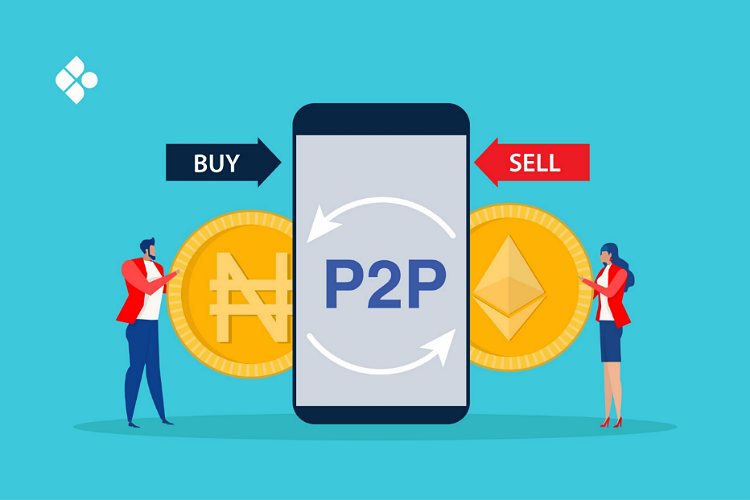
The appeal of this model comes down to design. Centralised exchanges operate like closed halls, where rules are fixed and choices are limited. In contrast, a P2P trading platform functions as an open marketplace. Buyers and sellers post their terms, select from a variety of payment methods, and negotiate directly. Escrow services ensure that neither party can walk away without fulfilling their obligations. It is an elegant balance of freedom and safety — a digital re-creation of how people have exchanged value for centuries, updated with encryption, ratings, and dispute resolution.
Sceptics, of course, point to risks. They warn of scams, fraud, and misinformation. And it is true: P2P trading platform trade requires awareness, just as any financial interaction does. Yet modern platforms have addressed these concerns with technology. Multi-factor authentication prevents account takeovers. Rating systems allow users to identify trustworthy partners. Artificial intelligence now monitors trades for suspicious patterns, automatically freezing problematic accounts. In practice, the P2P trading platform often offers more layers of security than informal money transfers or even certain traditional services.
The human dimension, however, is what truly sets P2P trading platform systems apart. Unlike centralised exchanges, where trades feel mechanical and anonymous, peer-to-peer deals involve people. Profiles, chat functions, and feedback systems create communities of traders who often return to do business again. Over time, these networks become stronger, fostering reputations and trust. For many users, this interaction transforms trading from a solitary financial task into a social experience, adding resilience to the overall system.
The global impact of peer-to-peer platforms is enormous. In countries with strict capital controls, the P2P trading platform becomes a tool of financial freedom, enabling citizens to bypass restrictions and connect to global markets. In areas with poor infrastructure, it fills the gap left by banks, enabling participation in remittances, savings, and investments. For regulators, this growth presents a challenge: how to create frameworks that prevent abuse without stifling innovation. For platforms, it means constantly balancing compliance with the principles of openness and privacy.
The road ahead will not be simple. Regulatory pressure is increasing, and with it the need for platforms to implement robust identity checks and compliance systems. Education is equally important, as beginners must be guided through safe trading practices. But these hurdles do not diminish the potential of the model. On the contrary, they highlight its resilience. A P2P trading platform thrives precisely because it adapts — to local payment systems, to cultural differences, and to evolving global rules.
Looking forward, peer-to-peer systems will likely integrate even more deeply with the wider digital economy. Connections with decentralised finance protocols, cross-border e-commerce, and even micro-lending could expand their utility. With every new feature, the peer-to-peer model grows stronger, not weaker. Its adaptability ensures that it will remain central to the evolution of finance, no matter how regulations or technologies change.
In the end, the P2P trading platform is more than just a marketplace. It is a symbol of inclusion, innovation, and participation. It embodies the shift from institution-led finance to people-led finance, proving that when individuals are given tools that balance freedom with trust, they can build systems that work for everyone. The stories of Maria, Anton, and countless others remind us that behind every trade is a human being — and that is what makes peer-to-peer trading one of the most important movements in the modern economy.