 Cryptocurrency transactions are widely recognized for their processing speed, with many transfers settling in just a few minutes. However, while rapid settlement is a core benefit of blockchain technology, digital commerce often requires more adaptable workflows to accommodate complex business operations.
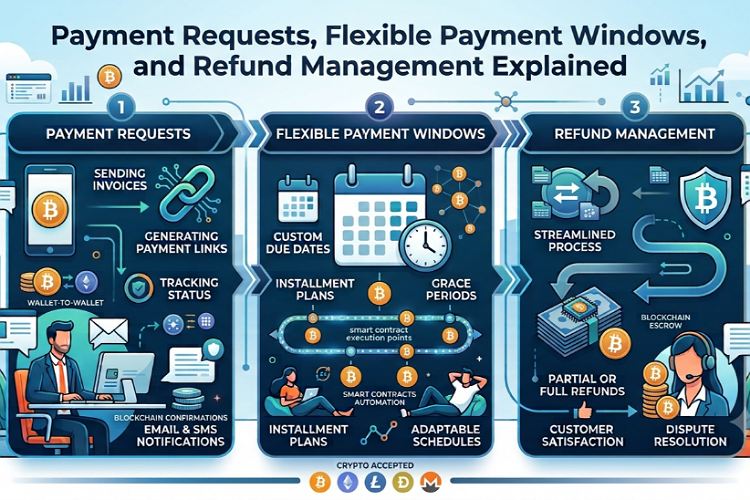
As covered by TechBullion, the introduction of specialized Payment Requests features allows merchants to transition away from rigid invoicing structures. This solution provides businesses with the necessary tools to handle transactions that demand extended processing timelines, internal corporate approvals, or structured financial adjustments, managing the entire lifecycle through a single administrative framework.
Traditional cryptocurrency payment processing heavily depends on time-sensitive invoices, which typically remain valid for about 15 minutes to mitigate the risks associated with price volatility. While this short-lived window is efficient for immediate retail checkouts, it introduces operational friction in many enterprise use cases. Customers frequently face scenarios where they need to transfer capital between cold and hot wallets, obtain multi-signature managerial sign-offs, or finalize the transaction later in the business day. When a standard invoice expires prematurely, merchants are forced to regenerate the billing documents, creating unnecessary bookkeeping complications and increasing the volume of customer support inquiries.
To resolve these operational bottlenecks, the Payment Requests architecture introduces configurable expiration periods that decouple the transaction from short, fixed intervals. Merchants can generate dedicated payment links tailored to specific operational requirements, allowing the request to remain valid for hours, days, or even weeks. This structural change ensures that the payment window reflects the actual timeline of the business agreement rather than the technical limitations of a standard crypto invoice. Consequently, clients can execute payments securely within an optimized timeframe without fear of invoice cancellation.
The user experience is further enhanced by directing customers to a comprehensive, centralized payment page designed to minimize human error during the transfer process. This interface aggregates all critical transaction details into a single view, including the accepted digital assets, appropriate blockchain networks, localized exchange rates, exact payment amounts, and detailed routing instructions. By presenting these parameters clearly before any funds are transmitted, the platform substantially lowers the risk of common user mistakes, such as deploying funds via incompatible network standards or entering incorrect payment values.
Beyond the initial collection of funds, managing digital asset refunds has historically been a manual and disorganized process for online enterprises. Merchants typically have to contact customers via external communication channels to request wallet addresses, verify ownership, and execute the return transfer manually. The integrated refund management system addresses this challenge by establishing a standardized workflow directly inside the merchant’s back office. Businesses can initiate full or partial refunds with minimal effort, triggering an automated, secure link sent to the customer. The recipient can then safely input their preferred destination address, streamlining the data collection and settlement process under a unified protocol.
The practical application of adaptable payment windows is particularly beneficial across a variety of commercial models, such as funding corporate account balances, securing long-term hospitality reservations, and managing subscription renewals that undergo routine procurement reviews. Furthermore, this approach proves essential for complex business-to-business settlements involving multi-tiered clearance procedures where immediate point-of-sale settlement is incompatible with standard operational workflows. By aligning invoice expiration with corporate timelines, businesses can significantly reduce technical friction and enhance transaction success rates.